The Deepfake regulation India 2025 has become the focus of a rapidly developing policy argument: the governments, courts and platforms are rushing to prevent AI-generated audio, images and video images destroying reputations, facilitating fraud or perpetrating political deception. This is the explainer of what the new rules (prepared by Lawyush) seek to do, why this is important, who gets impacted upon, and the steps which creators, platforms and lawyers should take at the moment.
The Real Target of the Deepfake Regulation India 2025 is all about.
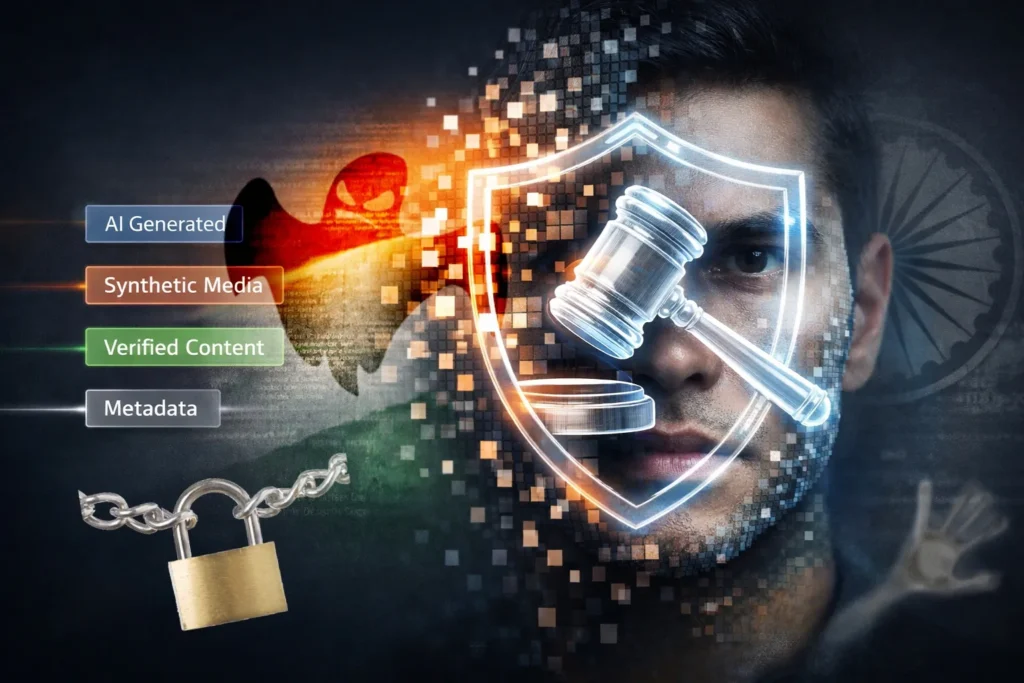
In its most basic understanding, Deepfake Regulation India 2025 is aimed at synthetically generated information (SGI) audio, photo or video material, altered or created by AI to such an extent that it can be confused with authentic media created by persons. The suggested changes to the intermediary/digital media regulations of India revolve around three levers:
Compulsory labelling and unremovable metadata on AI-generated content to be aware that it is manmade.
It should have quicker takedown and tracing responsibilities of the middlemen to eliminate malicious deepfakes (non-consensual intimate imagery, fraud, election-related disinformation).
Malicious creators and repeat distributors should face criminal and civil penalties, and platforms should now have a new due diligence responsibility.
The combination of the three is the foundation of the regulation of deepfakes in the country of India 2025: label, remove, and punish.
Why India moved quickly in 2025
The Deepfake regulation India 2025. The internet magnitude in India, coupled with the stakes in elections and the repetitive nature of misinformation, made doing nothing costly. Regulators and courts registered a steep increase in the number of cases in which synthetic media resulted in financial fraud, reputational damage and targeted sexual harassment by 2025. The approach taken by the government is based on the Information Technology Rules (2021) and is further expanded to cover the AI-created harms.
A series of court decisions, such as injunctions demanding the non-consent removal of deepfakes, defense of the personality rights of public figures, etc., have also compelled policymakers to act. The recent court interference demonstrates that judges are ready to consider deepfakes as direct threats to the social order and privacy.
Important provisions that are significant to creators and platforms
The Deepfake regulation India 2025, As a content producer, platform operator or legal consultant here are the pragmatic bits of deepfake regulation India 2025 that you have to pay attention to:
Visible labelling: Uploaders (or platforms) are required to place visible, persistent labels whenever introducing content that is either entirely or partially AI-generated. The label should have minimum dimensions of visibility to ensure that it does not go unnoticed.
Metadata and traceability: They should have metadata that allows tracing the source of the content and any synthetic generation pathway – helpful in law enforcement requests.
Declarations by users of synthetic content: Synthetic content. The proposal may make uploaders declare that content was synthesised or manipulated; incorrect declarations may lead to penalties.
Takedown and notice regimes: Takedown notices that are validated require a timely response by intermediaries; otherwise, they will raise liability.
Criminalisation of certain harms: Proposals of new draft laws and bills by individual members of parliament contain direct offences of producing or sharing intimate non-consensual deepfakes and impersonation to commit fraud.
The issues of concern are speech, innovation and safety.
Although the purpose of Deepfake Regulation India 2025 is to prevent harm, civil society organisations suspect that excessive regulations may suppress the right to speech and research. According to critics, extensive metadata or declaration requirements can be used as a tool to facilitate surveillance and enforcement targeted at intermediaries may lead to excessive removal of lawful material. Some organisations called upon MeitY to revise the draft rules in order not to chill satire, scholarly writing and lawful synthetic creativity.
Preparations of lawyers and product teams (practical checklist) should follow.
The Deepfake regulation India 2025, Under start-up, platform, creators and legal teams (including advice of lawyers): compliance will be both technical and legal:
Map synthetic content flows. List the places where you can post AI-generated content on your service.
Introduce prominent labels and metadata storage. Add UI controls to display synthetic labels and preserve metadata, which address provenance. (Label designs to comply with any visibility requirement of the government)
Change terms and uploader statements. Minimise content posted by uploaders; spell out punishment of falsity in your T&Cs.
Legal channel procedure and takedown. Establish a proven and rapid takedown and appeal procedure to act within legal timeframes.
Privacy & minimisation. Storage metadata To the extent possible, only store metadata retention that is strictly necessary and develop explicit access controls to law enforcement to prevent surveillance-style retention.
Threat modelling. Put harms first — intimate imagery which is not consented to should be in high priority and financial impersonation should be in high priority.
Trends in litigation and enforcement.
Even courts have already indicated their readiness to grant urgent relief, particularly when deepfakes have been employed to defame, threaten or harass individuals. Bad actors will most likely have their criminal investigation coupled with compliance checks by regulators on the platform. Anticipate the government to publish more technical specifications (labelling specs, metadata schema), and consult the industry on the finalisation of enforcement processes.
A final note from Lawyush
Deepfake regulation India 2025 is a measure that is needed to avert an increasing number of synthetic harms; however, it is not a panacea. To serve as an effective policy, the rules will have to be fine-tuned, privacy safeguarded, and the lawyering upheld to reasoned practices to ensure that the regulations enforced target wrongdoing and not lawful expression. Lawyush suggests a cooperative strategy: the technologists, civil society, courts and policymakers will have to refine the regulations to ensure that the rules being implemented are covering wrongdoing as opposed to lawful expression.
Follow us on Instagram.