

Ayush Agrawal

Ayush Agrawal is a final year LL.B. (Hons.) student with a background in Bachelor of Commerce. He has over 2 years of legal experience specializing in contract drafting, intellectual property, legal research, and client communication. Skilled in statutory interpretation, case law analysis, and managing confidential legal matters, Ayush is committed to supporting legal teams in civil, criminal, IP, and corporate law with accuracy, efficiency, and professionalism.

Delhi Riots bail case explained showing Article 21 and prolonged detention without trial

Delhi Riots Bail Case Explained: Core Legal Issue & Article 21

Introduction Personal liberty is among the key rights that the Constitution assures in a democratic nation such as India. No one ought to be detained in jail for years until the guilt of such a person has been established by the court. But more so, a number of the suspected individuals in the serious criminal […]

Delhi Riots Bail Case Explained: Core Legal Issue & Article 21 Read More »
Difference between MOA and AOA underCompanies Act 2013

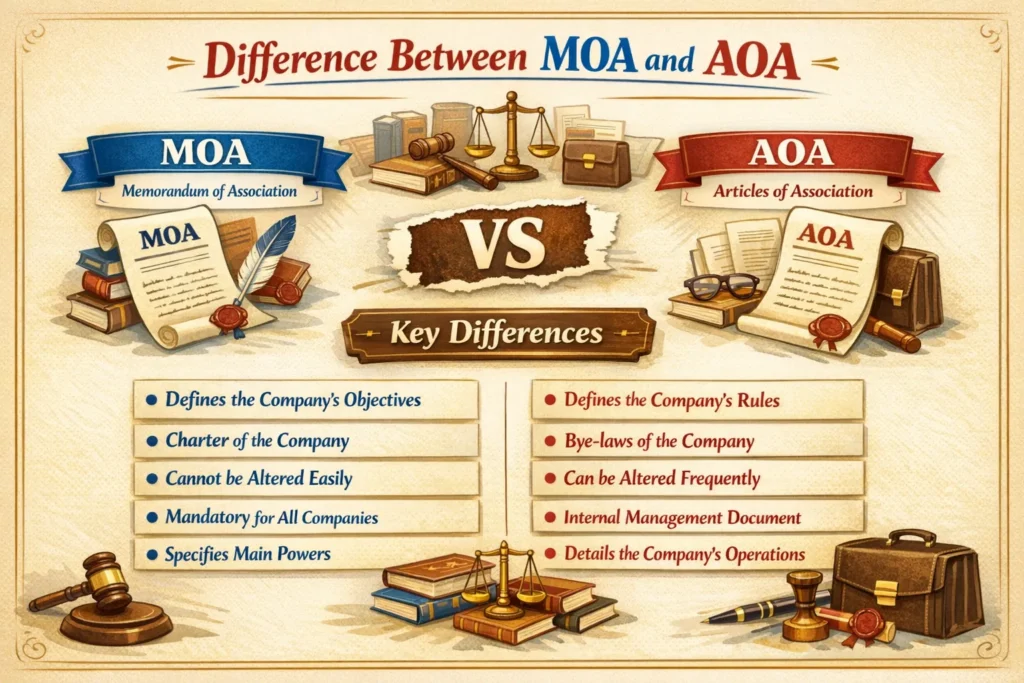
Difference Between MOA and AOA | Company Law Explained Clearly

One of the most common and basic questions in Company Law is the difference between MOA and AOA. You are a law student or a company secretary aspirant, an entrepreneur or a legal professional, you need to get to know the difference between MOA and AOA not only to grasp the difference theoretically, but practically

Difference Between MOA and AOA | Company Law Explained Clearly Read More »

MOA and AOA under Companies act 2013

MOA and AOA under Companies Act 2013: Meaning, Differences, and Legal Importance

The constitutional necessity of every firm established in India is the MOA and AOA under Companies Act 2013. You need to know MOA and AOA, whether you are a law student, company secretary aspirant, business start-up owner or compliance professional and the knowledge is important because you need to know the law as well as

MOA and AOA under Companies Act 2013: Meaning, Differences, and Legal Importance Read More »